How to Choose a Mountain Bike: Beginner’s Guide to 26 vs 27.5 Inch Bikes
Choosing your first mountain bike can feel overwhelming. There are so many options on the market, and every salesperson seems to have a different opinion. However, the most important decisions usually come down to two things: wheel size and frame fit. Get those two things right, and everything else falls into place.
This guide breaks down the key differences between 26-inch and 27.5-inch wheels. It also walks you through how to find a frame that fits your body properly. By the end, you will have a clear picture of what to look for before you spend a single dollar.
Why Wheel Size Matters More Than You Think
Most beginners focus on color, brand, or price. Those things matter, but wheel size quietly shapes your entire riding experience. It affects how your bike handles corners, rolls over rocks, and responds to your pedaling.
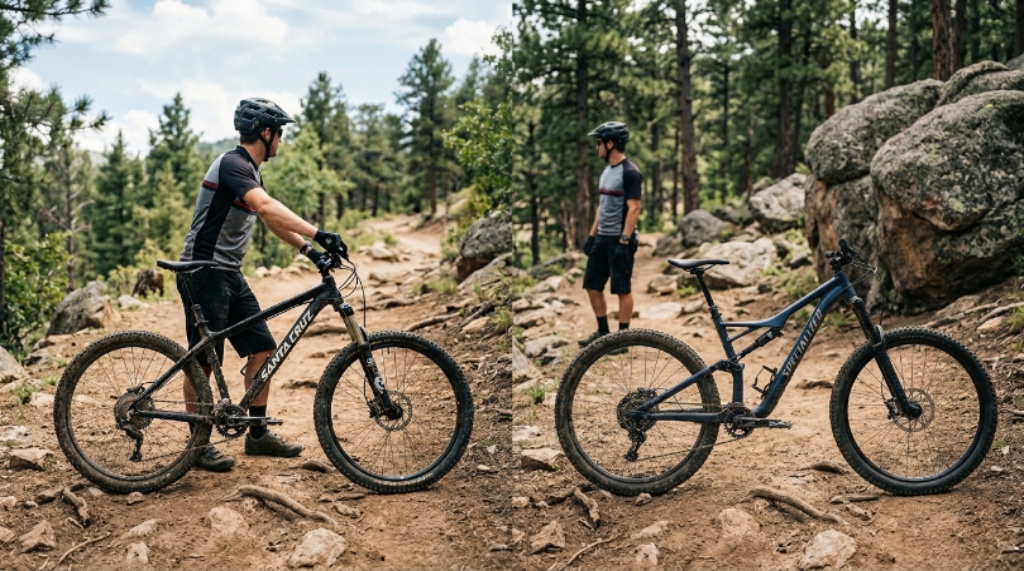
Mountain bikes typically come in three wheel sizes: 26 inches, 27.5 inches (also called 650b), and 29 inches. For beginners, the debate usually comes down to wheel size 26 vs 27.5, and for good reason. Both sizes are well-suited to new riders, but they perform differently depending on the terrain and the rider’s build.
Understanding 26-Inch Wheels
The 26-inch wheel was the standard in mountain biking for decades. It built the sport and earned a reputation for a reason.
Bikes with 26-inch wheels are lighter and more agile. They respond quickly when you turn, which makes them great for tight, twisty trails. Additionally, they accelerate faster because there is less rotational weight to get moving. For smaller riders, particularly those under 5’4″, a 26-inch wheel often feels more natural and easier to control.
There is also a practical advantage: parts for 26-inch bikes are widely available and usually cheaper. If you are on a budget and want a reliable machine that is easy to maintain, this size is worth serious consideration.
However, 26-inch wheels do have a drawback. They are less effective at rolling over large obstacles like rocks and roots. The smaller diameter means the wheel has to work harder to climb over things in its path. On rough, technical terrain, this can slow you down and make the ride feel bumpier.
Understanding 27.5-Inch Wheels
The 27.5-inch wheel sits between the nimble 26 and the large 29. It was designed to offer the best of both worlds, and for many riders, it delivers exactly that.
These wheels roll over obstacles more smoothly than 26-inch wheels. They maintain speed better on rough ground because the larger contact area grips the trail more effectively. Therefore, if you plan to ride on varied terrain, including forest paths, gravel, and rooted trails, the 27.5 gives you more versatility.
For riders between 5’4″ and 6’0″, the 27.5-inch wheel tends to fit the geometry of the bike very naturally. It balances maneuverability with momentum, so you do not have to sacrifice too much of one to get the other.
The trade-off is that 27.5-inch bikes are slightly heavier and a touch slower to accelerate from a standstill. They also cost a little more on average. However, for most beginners riding general trails, these differences are minor.
How to Use a Bike Frame Size Guide
Picking the right wheel size is only half the job. The frame needs to fit your body, or no amount of fancy components will make the ride comfortable.
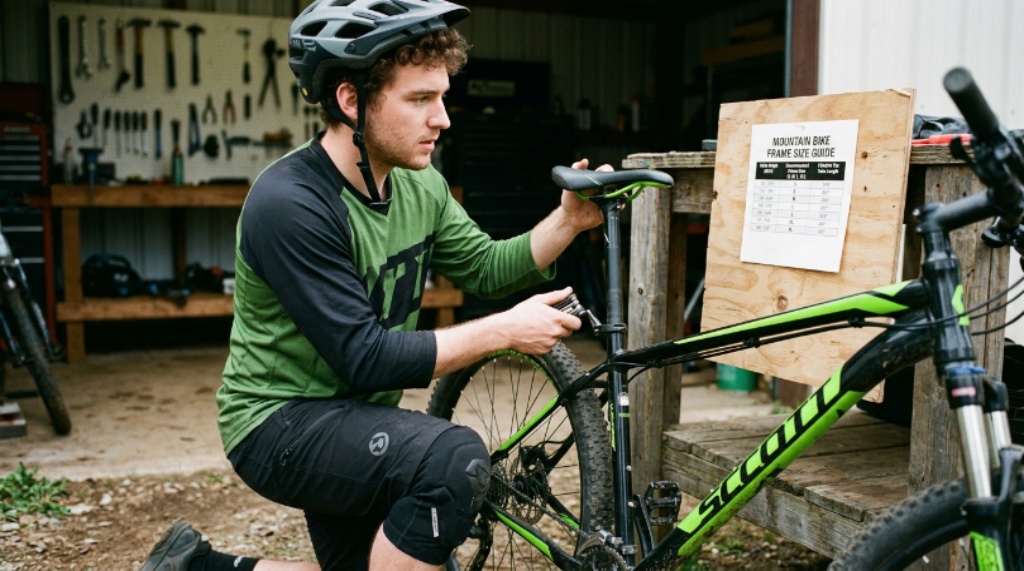
A proper bike frame size guide uses your height and inseam measurement to suggest a frame size. Here is a simple breakdown:
- Riders under 5’2″ typically fit a small (S) frame
- Riders between 5’2″ and 5’6″ usually suit a medium-small or medium (M) frame
- Riders between 5’6″ and 5’10” generally ride a medium or medium-large frame
- Riders over 5’10” often fit a large (L) or extra-large (XL) frame
These are starting points, not absolute rules. Your riding style and body proportions also play a role. Someone with long legs and a short torso may size differently from someone with the opposite proportions.
The best thing you can do is visit a local bike shop and sit on a few models. Your feet should be able to rest flat on the ground while seated, and your arms should reach the handlebars without straining. A slight bend in your knee at the bottom of the pedal stroke is ideal for efficient power transfer.
Terrain: Matching Your Bike to Your Trails
Before you commit to a wheel size, think about where you plan to ride most of the time.
If you live near smooth, packed dirt trails or light gravel paths, a 26-inch bike handles beautifully. It is easy to flick around corners and fun to ride at a moderate pace. Additionally, it is the better choice for bike parks with jump lines and pump tracks.
On the other hand, if your local trails are rough, rocky, or filled with roots and drops, a 27.5-inch wheel will serve you better. The extra rolling momentum helps carry you through rough patches without losing control. Therefore, riders in hilly or wooded regions tend to prefer the larger wheel size.
If you are completely unsure, start by asking local riders what they use. Trail communities are usually happy to share advice, and nobody knows a trail better than the people who ride it every week.
Budget Considerations for New Riders
Beginner MTB tips would not be complete without talking about budget. It is tempting to buy the cheapest bike available, but a very low-cost mountain bike often comes with heavy, unreliable components that make learning harder.
A reasonable starting budget for a decent beginner mountain bike sits between $500 and $1,000. In this range, you can find bikes with quality drivetrains, reliable brakes, and a solid frame. Both 26-inch and 27.5-inch options are available in this price bracket.
However, if your budget is tight, the 26-inch wheel often gives you more value for money. Used bikes with 26-inch wheels are plentiful and affordable. Parts are cheaper and easier to find. For a beginner who is not yet sure how committed they are to the sport, this is a smart place to start.
As your skills grow, you will naturally develop preferences. At that point, upgrading to a 27.5 or even a 29-inch bike makes more sense because you will know exactly what you want.
Suspension: Hardtail vs Full Suspension
While you are comparing wheel sizes, you will also encounter the choice between hardtail and full-suspension bikes. This is worth understanding early.
A hardtail bike has front suspension forks but a rigid rear frame. It is lighter, simpler, and cheaper to maintain. Most experts recommend hardtails for beginners because they teach you to read the trail and pick smart lines rather than relying on the suspension to absorb every mistake.
Full-suspension bikes have both front and rear shock absorbers. They are more comfortable on rough terrain but cost significantly more and require additional maintenance. Additionally, the added complexity can make diagnosing mechanical issues harder for new riders.
For most beginners, a hardtail with 27.5-inch wheels or a hardtail with 26-inch wheels is the sweet spot. It gives you a capable, honest bike that grows with your skills.
Conclusion
Choosing your first mountain bike does not have to be complicated. Start by thinking about your height, which will point you toward the right frame size. Then consider where you plan to ride most often, which will guide your wheel size decision. If you are smaller or riding tight, playful trails, a 26-inch bike is an excellent choice. If you are a medium or taller rider tackling varied terrain, the 27.5-inch wheel offers a noticeable advantage.
Remember to set a realistic budget and prioritize frame fit above all else. A well-fitting bike on familiar terrain will always outperform an expensive machine that does not suit your body or riding style. Use a reliable bike frame size guide, test ride a few options, and do not rush the decision. The right bike will make every ride more enjoyable and help your skills develop faster.
Frequently Asked Questions
Is a 26-inch or 27.5-inch bike better for beginners?
Both are good for beginners. The 26-inch is lighter and more agile, making it great for smaller riders or tight trails. The 27.5-inch rolls over obstacles better and suits taller riders or varied terrain. Your height and local trails should guide the choice.
What frame size should I get if I am 5’7″?
At 5’7″, you will generally fit a medium or medium-large frame. However, always test ride the bike if possible. Your inseam length and personal comfort matter just as much as your overall height.
Can I upgrade a 26-inch bike to 27.5-inch wheels later?
In most cases, no. Wheel sizes are tied to the frame geometry and fork design. Swapping wheel sizes usually requires replacing the entire frame and fork, which is rarely worth the cost.
How much should a beginner spend on their first mountain bike?
A budget of $500 to $1,000 is a solid starting point. Bikes in this range offer reliable components without the premium price of professional-level equipment. Avoid going too cheap, as very low-cost bikes often have heavy, unreliable parts.
Do I need full suspension as a beginner?
Not usually. A hardtail bike is the better starting point for most beginners. It is lighter, cheaper, and teaches you better trail-reading skills. Full suspension bikes are better suited to advanced riders tackling very rough, technical terrain.
Related T0pics:
How to Choose Eco Surf Gear: A Beginner’s Guide to Sustainable Surfing
Big Ripper Bike Wheel Size Impact on Ride Stability









Post Comment