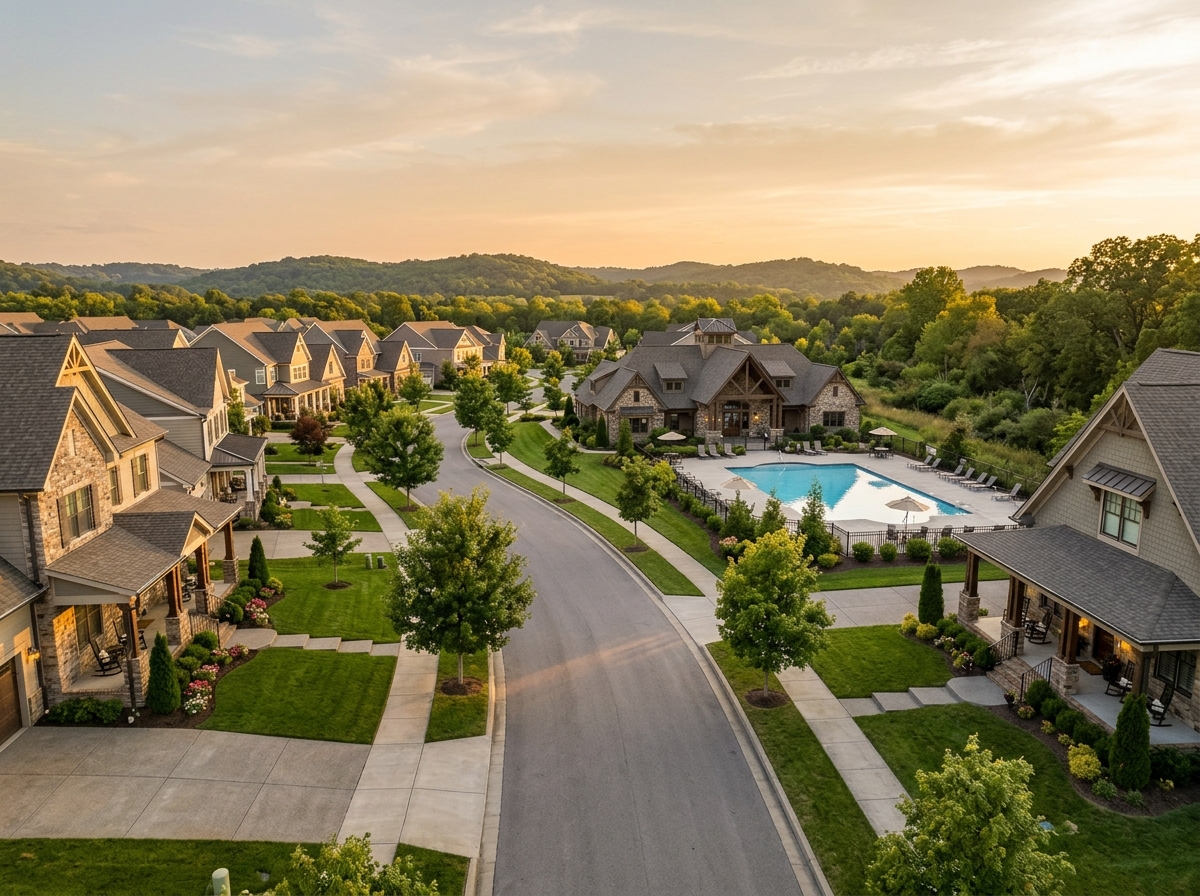
What To Check Before Buying In A Master-Planned Community In Franklin, Tennessee
In Franklin, Tennessee, a home search often involves more than comparing kitchens, bedrooms, and curb appeal. Master-planned communities can combine housing, parks, sidewalks, gathering spaces, retail access, and association-managed services, so the neighborhood itself deserves the same careful review as the house.
For buyers researching homes for sale in Westhaven, The Reed Collective provides a Franklin-area listing resource focused on available properties in Westhaven and local market context. As a real estate team affiliated with Compass Tennessee, LLC, serving Franklin and broader Williamson County, the team can help buyers compare property types, locations within the community, and recent listing details that may change during an active search.
Start With the Complete Monthly Cost
The list price is only one part of the ownership picture. Before setting a comfortable budget, add mortgage principal and interest, property taxes, homeowners insurance, HOA or master association dues, utilities, maintenance, and transportation costs.
Two similarly priced homes can carry very different monthly obligations. One may have higher dues that include common-area upkeep and amenities, while another may require more lawn care, pool care, or exterior maintenance from the owner. Ask whether dues cover services you would otherwise pay for separately, and ask whether there are transfer fees, capital contributions, or pending special assessments.
Read HOA Documents Before Making an Offer
Association documents explain how a community operates. Request the current covenants, conditions, and restrictions, fee schedule, budget, financial statements, reserve information, meeting minutes, and any available record of special assessments.
Pay particular attention to rules affecting rentals, pets, parking, fences, landscaping, exterior paint, additions, and architectural changes. A restriction is not automatically a problem, but it should fit your intended use of the home. If you may rent the property later, work from home, install a fence, or add outdoor features, confirm the applicable policy before committing.

Decide Whether the Amenities Fit Your Routine
A pool, clubhouse, fitness center, trail system, playground, court, or event lawn can add genuine convenience, but only if your household expects to use it. Tour amenities at the time of day you would realistically visit. Ask about guest policies, reservation procedures, seasonal hours, maintenance responsibility, and whether access requires a separate membership.
Also distinguish between amenities that are open today and those shown on a future site plan. A planned feature may improve the community over time, but it should not be valued as though it is already available.
Understand the Development Phase
Buying in a completed section may provide a clearer sense of traffic, landscaping, and daily activity. Buying in an active phase can offer newer construction and more choices, but it may also mean construction vehicles, dust, noise, changing views, and future builder inventory.
Review the community map and ask how many phases remain. Identify nearby lots, planned roads, commercial areas, parks, schools, and open land. A home backing to a field can feel private today while still being near a future building site, road, or amenity area.
Verify Schools and Everyday Travel
Confirm school assignment information for the exact address rather than relying on a listing description or community reputation. Williamson County families can use the district’s school zone information to check address-based zoning and understand that boundaries can change as enrollment and facilities change.
Visit the neighborhood on a weekday morning, after work, and during school drop-off if possible. Test the route to work, grocery stores, medical care, and activities that matter to your household. Notice sidewalks, crossings, lighting, parking, and the time required to leave or enter the community during busier periods.
Compare New Construction With Resale Homes
Neither option is universally better. New construction offers current layouts, newer systems, builder warranties, finish choices, and possible financing incentives. Resale homes have mature landscaping, completed surroundings, established traffic patterns, and upgrades by previous owners. Always get an independent inspection if allowed. New homes can benefit from a professional review, and resale homes need careful evaluation of age, maintenance, roof, systems, drainage, and repairs.
Evaluate the Exact Lot and Location
Location within the same community can influence privacy, noise, convenience, and future resale appeal. Consider distance from entrances, main roads, schools, pools, clubhouses, parks, event spaces, and golf facilities. Review lot orientation, drainage patterns, retaining walls, nearby traffic, alley access, and the view from the home’s main living areas.
Do not assume a premium view or quiet setting will remain unchanged. Check adjacent parcels and local planning information before placing undue value on nearby open space or undeveloped land.
Review Insurance, Drainage, and Property Risks Early
Request an insurance quote before the end of your due-diligence period, since coverage availability and cost can affect affordability. Review seller disclosures, inspect grading and drainage, and ask about water intrusion or repairs. Buyers can also search an address through the FEMA Flood Map Service Center as one part of understanding mapped flood hazards.
A map result does not replace insurance guidance, an inspection, or local expertise. Consider the property’s specific elevation, drainage features, crawl space or basement condition, roof age, and association responsibilities for common drainage infrastructure.
Use Market Data as a Comparison Tool
Recent closed sales are generally more useful than asking prices alone. Compare homes with similar size, age, condition, lot placement, upgrades, and property type. Separate townhomes, condominiums, and single-family homes instead of treating a broad neighborhood average as a direct value estimate.
Also consider whether new construction will compete with a future resale. Builder incentives, unfinished phases, and a supply of similar homes can affect how a property compares when it is time to sell.
A Simple Community Comparison Method
Score each community from one to five in these categories, then write a short note explaining the score:
- Monthly cost: Does the total ownership cost fit the household budget?
- Location: Do commute times and daily errands work in practice?
- Amenities: Will the household use what dues are used to support?
- Rules: Do association policies fit future plans?
- Development: Is the remaining construction acceptable?
- Resale outlook: How will the home compare with nearby alternatives?
Questions to Ask Before Choosing
- Which fees apply specifically to this home?
- Are increases or special assessments being discussed?
- Which amenities are complete and included today?
- Who maintains roads, trails, parks, and common areas?
- What construction remains close to this lot?
- What rental, fence, landscaping, and exterior-change rules apply?
- What recent comparable homes have actually sold nearby?
Choose the Community That Fits Everyday Life
The best master-planned community is not necessarily the one with the grandest entrance or the most impressive model home. It is the one that works with your budget, schedule, household needs, and long-term plans. By reviewing costs, documents, amenities, travel patterns, property condition, and future development before making an offer, buyers can make a more confident Franklin, Tennessee purchase decision.
Alex

Hi, I am Alex ; I am an entrepreneur, father, mentor, and adventurer passionate about life. At this moment, I am writing about business and lifestyle ideas.








Post Comment