Is Your Timber Ready to Use
There’s more to buying timber than just selecting the timber and taking it to the job and starting to cut, fix or install it. First you need to check that the timber you have purchased is suitable for use on site.
Check the Moisture Content
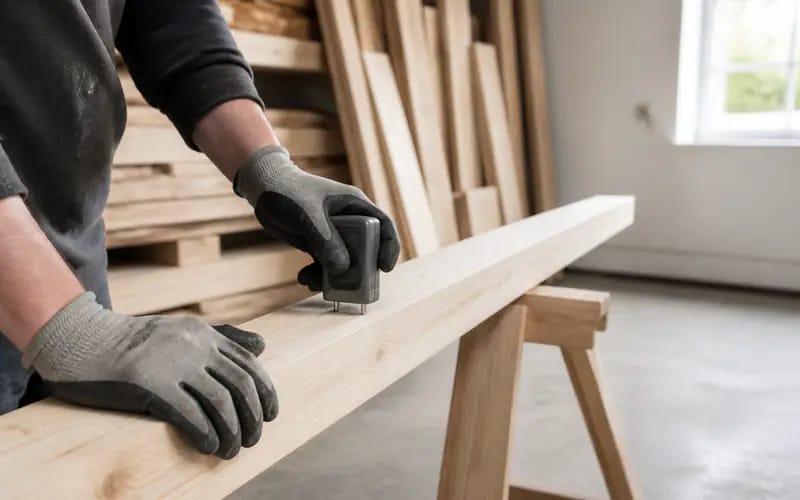
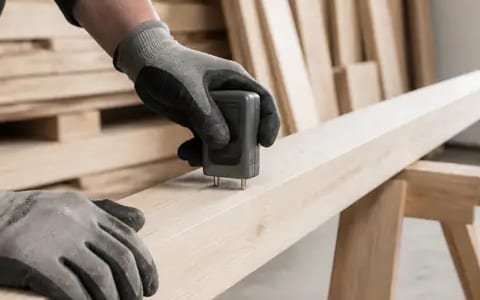
A simple moisture meter can be purchased for around £20 to £40. Measuring the MC of timber takes seconds to do. For joinery and flooring the MC should be in the region of 9% to 11%. For structural timber left in a dry covered building the MC can be up to 20% but this would decrease over time as the timber dries out. However, if the MC is obviously higher than this then the timber is still drying out and could expand, contract or even shrink and become deformed after it has been cut and fixed into position.
Look Along the Length for Warping
Any joinery or flooring can be slightly twisted or bowed, and in most cases this will settle once the item is fixed into position. The extent to which wider boards cup is a particular problem for them, and needs to be carefully considered before fixing them to a floor or wall. The simplest test to see if a board is straight is to place it on a flat surface and see if any daylight can be seen in the middle when viewed along its length against a straight edge. If so, then return it to the supplier and select an alternative length.
Check the Ends and Faces for Splits
Hairline splits at the end of a board are common – they’re known as checking – and occur because the outer layers of the wood dry out faster than the core. However, deep splits within the board or cracks in the face are signs that the timber has dried too quickly, possibly unevenly, and lost strength. Timber intended to be used structurally should be rejected if it exhibits such splitting.
Confirm the Grading Stamp Matches the Job
Look for the grading stamp (e.g. C16 or C24) and strength class on load bearing timbers such as joists and rafters. C16 is a commonly used grade for most domestic work whilst C24 is slightly stronger and ideal for longer span construction or heavier loading. If there is no grading stamp on structural timbers, then it is impossible to ascertain the timber’s strength and it should not be used for structural purposes. This is something that can be checked in seconds and is far more important than the timber looking nice!
Match the Treatment Class to Where It’s Going
Treated Timber must be of the correct class for the application, above ground use for items such as cladding and fascias and below ground for items such as fence posts, decking support etc. Always check the treatment label for class and look for ground contact or in ground use. This is a very common mistake and can cost a lot more in the long run.
Give It a Smell and Colour Check
There is no excuse for not checking for signs of rot or mould. If timber has been stored in a damp, dirty environment then it is likely to suffer from mould or even rot before it is delivered to your site. However, this does not mean that the timber is unusable, just that you need to cut it up or split it as soon as possible and build it into a part of your building where you will be able to see it for years to come. As previously mentioned, this type of practical, factual readiness checking is what you would expect from quality Timber Merchants Southampton suppliers, and most of this type of checking can be backed up by independent technical guidance on issues such as timber moisture content and the various grades of timber available.
Ask How It’s Been Stored
Storing timber flat, off the ground with good airflow between boards is key to ensuring it dries evenly and doesn’t warp or split. So it’s only fair that you ask the merchant how they have stored a batch of timber prior to purchase.
For Timber Merchants Southampton, see Timbco.
Let It Acclimatise Before Fixing
All timber, even if it has passed all the above checks, needs time to acclimate to the conditions of the room or site where it is to be fixed. Bring flooring, skirting, joinery to the building and allow it to stack with space between boards with stickers in place for a few days. The longer to allow to acclimate the better, especially in winter when the house is cold and the van has been travelling on cold roads and the building is warm and dry. Gaps appearing in flooring several months after completion of a job is one of the most common causes and is due to the timber in the van having been fixed straight into the warm house.
By carrying out these basic checks prior to commencing work in the timber you have purchased, most problems can be highlighted and put right prior to fixing the timber as opposed to after it has been fixed into place.











Post Comment