After A Car Crash: A Clear Plan For Damage Checks, Insurance, And Repairs
Key Takeaways
- Put safety first, then document the scene and exchange necessary information.
- Visible dents and scratches may not reveal damage to sensors, suspension, cooling parts, or vehicle structure.
- Photos, notes, receipts, and crash-report information can make an insurance claim easier to follow.
- Repair estimates should explain parts, labor, scans, calibration, paint work, and potential added damage.
- Before pickup, inspect the vehicle’s appearance, warning lights, driving behavior, and repair paperwork.
A crash can be disorienting, even when nobody appears seriously hurt, and the vehicle still moves. A practical plan can help drivers focus on immediate safety, preserve useful information, and make more informed decisions before choosing an auto body shop.
The goal after an accident is not simply to make a vehicle look normal again. It is to identify damage, understand the insurance process, and confirm that the finished vehicle operates safely. Keeping the process organized also helps reduce confusion when estimates or timelines change.
What To Do At The Crash Scene
Start with people, not property. Check for injuries, call 911 when emergency help is needed, and move away from traffic only if doing so is safe. Avoid debating fault at the scene, since officers and insurers will review the available information later.
- Check everyone involved and request medical assistance when necessary.
- Turn on hazard lights and move to a safer location if the vehicle can be moved safely.
- Call law enforcement when injuries, major damage, unsafe conditions, or disagreements are involved.
- Exchange names, contact details, license information, and insurance details.
- Write down witness contact information without arguing about responsibility.
Once immediate needs are addressed, arranging collision repair involves more than replacing an obviously damaged panel. The vehicle may need a detailed inspection before anyone can identify the full scope of repairs.
How To Document Vehicle Damage
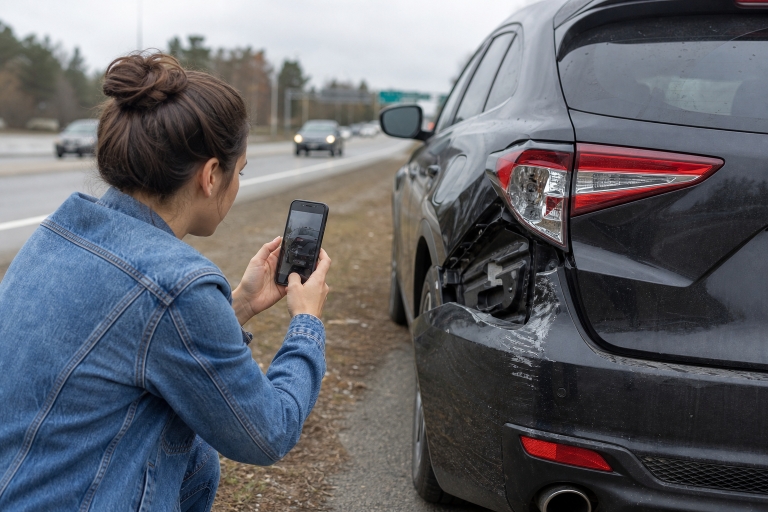
Good documentation creates a record that can be useful during a claim and while comparing repair findings. Take photos before the vehicles are moved when possible, but never remain in an unsafe roadway just to get pictures.
- Photograph all four sides of each vehicle from a distance.
- Capture close-ups of dents, broken lamps, glass, mirrors, wheels, tires, and fluid leaks.
- Include license plates, road markings, traffic signals, weather conditions, and nearby signs.
- Record dashboard warnings, airbag deployment, and the position of damaged wheels.
- Save the original images and write down the date, time, location, and names of witnesses.
Keep copies of the crash report, towing receipt, rental documents, medical paperwork when relevant, and all insurer messages. Guidance on vehicle insurance in the United States can also help drivers understand why policy terms, coverage limits, and state requirements matter.
Why Hidden Damage Can Appear Later
A vehicle may look drivable after a minor impact while still having damage behind the bumper, under a fender, or near a wheel. Seemingly small impacts can affect mounting points, wiring, radiator supports, steering components, alignment angles, and suspension parts.
Modern vehicles may also have cameras, parking sensors, radar units, and driver-assistance equipment near bumpers, mirrors, windshields, and headlights. As sensors and cameras can require recalibration after a crash, a visual check alone may not show whether those systems are positioned and functioning correctly.
How The Insurance Claim Process Works
- Report the incident: Provide the insurer with the basic facts as soon as practical.
- Submit records: Share requested photos, reports, receipts, and contact information.
- Review the estimate: Compare the insurer’s initial assessment with repair findings.
- Address additional damage: Ask how hidden damage found during disassembly will be documented and approved.
- Confirm payment details: Review the deductible, rental coverage, payment timing, and any out-of-pocket costs.
Coverage rules differ by policy and state. If an insurer makes a decision that is unclear, ask for an explanation in writing and keep notes of phone calls, dates, names, and claim numbers.
What To Check On A Repair Estimate
An estimate should separate labor, replacement parts, paint materials, towing, storage, scans, calibration, and rental transportation when applicable. Ask whether parts are original equipment, aftermarket, recycled, or reconditioned, and confirm which option is authorized.
- Which damaged parts will be repaired rather than replaced?
- Will nearby panels need paint blending for a consistent finish?
- Are diagnostic scans and safety-system calibrations included?
- What happens if technicians find additional damage after disassembly?
- What warranty and final repair documentation will be provided?
How To Compare Repair Facilities
When comparing facilities, look beyond the bottom-line estimate. Consider experience with the vehicle’s make and technology, clear written communication, part descriptions, estimated scheduling, warranty terms, and the ability to handle supplemental damage with the insurer. A lower initial quote may omit necessary procedures that become clear later.
What A Typical Repair Timeline May Include
Repair time varies based on damage severity, parts availability, insurer approvals, paint work, and calibration requirements. The process commonly includes intake, estimating, disassembly, supplemental approval, structural or mechanical repairs, refinishing, reassembly, electronic checks, and a final road test.
Delays do not automatically indicate poor workmanship. Backordered parts, newly discovered damage, and approval steps can change the original completion date. Request periodic updates and retain written records of any major timeline revision.
How To Inspect The Vehicle Before Pickup
Inspect the vehicle in daylight when possible and compare it with pre-repair photos. Check panel gaps, paint color, trim, lights, mirrors, windows, locks, cameras, and dashboard warning lights. During a short drive, listen for rattles or rubbing, verify that the steering wheel sits straight, and note any pulling or vibration.
Before leaving, collect the final invoice, warranty information, repair order, scan or calibration records, and any instructions for follow-up. Raise concerns promptly and document them with photos.
Common Questions About Collision Repairs
Can A Car Have Serious Damage Without Looking Bad?
Yes. Damage behind exterior panels can affect structural supports, cooling equipment, alignment, wiring, sensors, and suspension components.
What Is A Supplemental Estimate?
A supplemental estimate covers additional damage discovered after disassembly. The repair facility documents the findings and submits them for insurer review.
Why Might Calibration Be Needed?
Cameras and radar-based safety systems can be shifted by an impact, replacement part, wheel alignment change, or windshield work. Calibration helps verify their intended operation.
What If The Finished Repair Does Not Look Right?
Photograph the issue, contact the repair facility quickly, and notify the insurer if the concern relates to the claim. Keep every estimate, invoice, and message for follow-up.
Conclusion
A manageable collision-repair process starts with safety and continues with careful documentation, clear questions, and a thorough final inspection. The strongest outcome is not just a clean-looking vehicle. It is a vehicle with documented repairs, properly checked systems, and a driver who understands what was completed.
Alex

Hi, I am Alex ; I am an entrepreneur, father, mentor, and adventurer passionate about life. At this moment, I am writing about business and lifestyle ideas.









Post Comment