How to Create Balanced Meals for Babies Starting Solids
A baby’s first spoonful is rarely just about food. It is a milestone that often arrives with equal parts excitement and quiet worry, especially when a tiny portion of mashed sweet potato suddenly feels like it should meet every nutritional requirement. Most parents quickly discover that balanced meals for babies are less about perfection and more about patterns: offering variety, watching for readiness cues, and knowing which nutrients matter at each stage. Whether you are preparing purees at home or comparing equipment, a solid guide to buying a baby food maker can help you choose tools that genuinely match your routine rather than collecting dust on the counter. This article walks through the practical side of building balanced meals from the first bite onward.
Quick Answer
A balanced meal for a baby starting solids combines a source of iron, a source of energy (carbohydrate or healthy fat), and a fruit or vegetable for vitamins and fiber. At around 6 months, breast milk or formula still provides most nutrition, so solid meals should focus on introducing variety, textures, and iron-rich foods rather than hitting exact calorie targets. Start with one or two solid meals per day and increase gradually based on your baby’s cues and your pediatrician’s guidance.
Key Takeaways
- Iron and zinc become especially important around 6 months because a baby’s stored reserves begin to deplete, so include iron-rich foods such as fortified cereal, pureed meat, beans, or lentils early.
- Balanced does not mean complicated. A simple combination of iron source + energy source + fruit or vegetable covers most of what a baby needs at this stage.
- Breast milk or formula remains the primary source of nutrition until about 12 months, so solid food complements rather than replaces milk feeds.
- Introduce one new food at a time for a few days so you can identify any reactions or sensitivities more easily.
- Texture progression matters as much as nutrition. Moving from smooth purees to mashed and soft finger foods helps develop chewing skills and reduces picky eating later.
What Makes a Meal Balanced for a Baby?
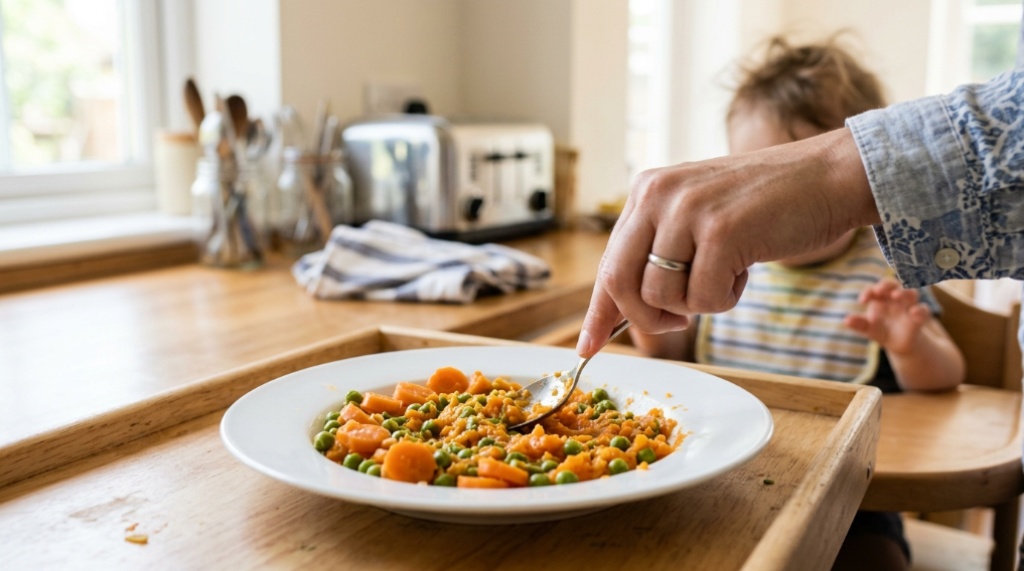
A balanced baby meal is one that covers a small but meaningful share of key nutrients while helping the baby practice eating. It does not need to be nutritionally complete on its own, because milk feeds still do most of the heavy lifting. What it should do is offer variety across food groups over the course of a day or a week, not necessarily within a single spoonful, If you are planning a fun family weekend out after prepping your baby’s weekly meals, check out the 317 BBQ Broad Ripple Pillow Fight 2026: Event Details, Activities, Tickets for local entertainment ideas.
The core building blocks are:
- Iron and zinc sources: iron-fortified infant cereal, pureed or finely minced meat, poultry, egg yolk, lentils, beans, and tofu.
- Energy sources: carbohydrates such as potato, sweet potato, rice, oats, and healthy fats like avocado, olive oil, or full-fat yogurt (once dairy is introduced).
- Fruits and vegetables: cooked and pureed or soft-cooked pieces for vitamins, minerals, and fiber.
Many parents assume every meal needs all three at once. That is a helpful goal but not a strict rule. A morning meal of iron-fortified oatmeal with mashed banana and an afternoon meal of pureed chicken with carrot covers the same nutritional ground as a single elaborate combination.
How Much Should a 6-Month-Old Eat?
At the beginning of solids, portions are small. A common starting point is one to two tablespoons of a single-ingredient food once or twice a day, increasing gradually as the baby shows interest and tolerance. By around 8 to 9 months, many babies eat two to three small meals plus snacks, though the range varies widely.
The more reliable guide is the baby, not the measuring spoon. Signs of readiness to increase solids include leaning forward, opening the mouth for the spoon, and reaching for food. Signs of fullness include turning the head away, closing the mouth, or pushing food out. Forcing an extra spoonful to hit a target often backfires and can set up negative associations with mealtime.
Milk feeds should continue on demand. Between roughly 6 and 12 months, breast milk or formula still supplies the majority of calories and nearly all of the fluid needs.
Why Iron Deserves Special Attention
Iron is the nutrient most likely to fall short once a baby reaches about 6 months. Full-term babies are born with iron stores that generally last four to six months, after which food and fortified formula must fill the gap. Iron supports brain development and oxygen transport, and deficiency during infancy can have lasting effects if it goes unaddressed.
Practical ways to add iron include:
- Iron-fortified infant cereal mixed with breast milk, formula, or water.
- Well-cooked and pureed red meat, poultry, or liver in small amounts.
- Mashed lentils, chickpeas, or black beans.
- Egg yolk, once eggs have been introduced safely.
Pairing iron-rich foods with a source of vitamin C, such as pureed tomato, orange, or red pepper, can improve iron absorption from plant sources. This is a simple pairing that costs nothing extra and offers a small but real benefit.
Choosing Equipment That Fits Real Life
A baby food maker is not strictly necessary. A steamer basket, a pot, and a blender or fork will produce the same results for many families. The value of a dedicated appliance usually comes down to convenience: less cleanup, fewer dishes, and faster prep during the window when a baby is hungry and patience is thin.
When comparing options, the factors that tend to matter most are:
- Batch size: small batches suit single-ingredient introductions; larger batches suit weekly meal prep and freezing.
- Steam and blend in one unit: fewer transfers mean less mess and less nutrient loss from discarding cooking water.
- Texture control: variable blending helps you progress from smooth puree to thicker mash without buying new equipment.
- Cleaning effort: parts that are dishwasher-safe and have few crevices get used more often.
- Counter space and noise: small kitchens and thin walls are real constraints that reviews rarely mention.
A useful habit is to decide how you actually cook before buying anything. Families who batch-cook and freeze benefit from larger capacity. Families who prefer fresh, small portions often do better with a compact steamer-blender or even a handheld immersion blender.
A Simple Template for Balanced Meals
The following template can be adapted to almost any ingredient you have on hand. It is not a rigid formula, just a way to make sure nothing important gets left out.
- Pick an iron source. Choose one: fortified cereal, meat, poultry, egg yolk, lentils, beans, or tofu.
- Add an energy source. Choose one: potato, sweet potato, rice, oats, avocado, or full-fat yogurt.
- Add a fruit or vegetable. Choose one with a color: carrot, peas, spinach, broccoli, apple, pear, or banana.
- Adjust texture. Blend, mash, or chop depending on your baby’s current stage.
- Serve at a safe temperature. Warm, not hot, and always supervise mealtime.
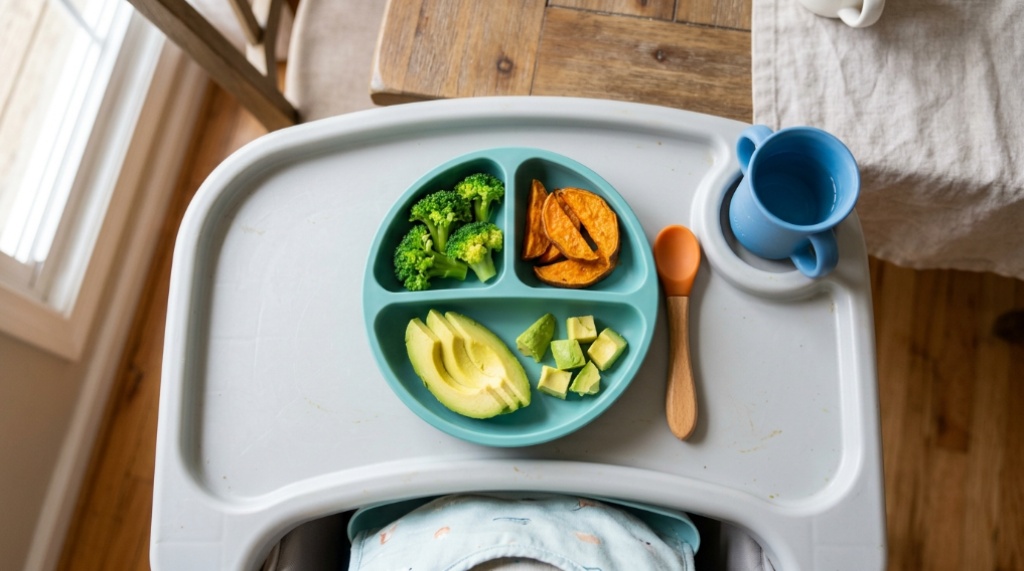
A sample day might look like: iron-fortified oatmeal with mashed banana in the morning, pureed chicken with sweet potato and peas at midday, and soft avocado slices in the afternoon. That covers iron, energy, produce, and texture practice without any single meal being complicated.
Common Mistakes Worth Avoiding
Most feeding struggles come from a handful of predictable missteps rather than from any single food choice.
- Delaying allergenic foods too long. Current guidance generally supports introducing common allergens such as peanut, egg, and dairy early and regularly, in age-appropriate forms, unless a pediatrician advises otherwise.
- Adding salt or sugar. A baby’s kidneys are not ready for added salt, and added sugar offers no benefit.
- Skipping texture progression. Staying on smooth purees past 8 or 9 months can make the transition to lumps and finger foods harder.
- Offering honey before 12 months. Honey carries a risk of infant botulism and should be avoided entirely in the first year.
- Treating a refused meal as failure. It can take many exposures before a baby accepts a new food, and pressure tends to slow that process rather than speed it up.
Frequently Asked Questions
How do I know if my baby is ready for solids?
Common signs include good head and neck control, sitting with minimal support, showing interest in food, and losing the tongue-thrust reflex that pushes food out. Most babies reach these milestones around 6 months, but readiness varies. A pediatrician can confirm whether your baby is ready.
Can I skip baby cereal and go straight to table foods?
Yes, iron-fortified cereal is one option among several, not a requirement. Well-cooked pureed meat, lentils, beans, and tofu are also strong iron sources. The important thing is that iron-rich foods appear regularly once milk alone no longer covers the gap.
Should I introduce one food at a time?
Introducing one new food for a few days before adding another makes it easier to spot a reaction or sensitivity. Once a food is well tolerated, it can be combined with others freely.
How do I balance meals if my baby refuses vegetables?
Keep offering without pressure and mix vegetables into familiar foods, such as pureed carrot stirred into mashed potato. Repeated exposure over many weeks is often what shifts acceptance, not a single successful meal.
Is it safe to freeze homemade baby food?
Yes, most purees freeze well in ice cube trays or small containers for up to about a month. Thaw in the refrigerator and reheat gently, and do not refreeze food that has already been thawed and warmed.
Do I need a baby food maker to make balanced meals?
No. A steamer, pot, blender, or fork can do the job. A dedicated appliance mainly saves time and cleanup, which matters more for some families than others.
Conclusion
Balanced meals for a baby starting solids come down to a few reliable habits: include an iron source, add energy and produce, progress textures steadily, and let milk feeds continue doing most of the nutritional work. Perfection is not the goal, and a refused spoonful is not a setback. Start simple, watch your baby’s cues, and adjust portions and combinations as their appetite and skills grow.










Post Comment