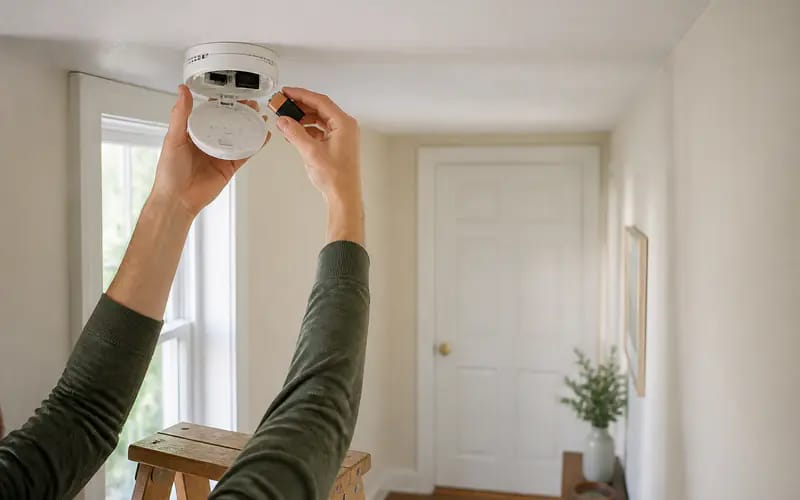
When to Replace Fire Alarm Batteries
Are you regularly woken by a fire alarm going off in the middle of the night and then finding that the cause is a flat battery? You can avoid this problem by following a simple approach and making sure that your fire alarms are tested on a regular basis.
Check What Battery It Actually Takes
The first thing to check is what type of battery the alarm takes. These are typically 9V block batteries or even a pair of AA batteries but many home smoke detectors now come with a sealed 10-year lithium battery. These sealed 10-year life batteries are designed to be used and then thrown away after the ten years but not to be re-batteried. Find out what type of battery your smoke detector takes by looking inside the cover or checking the manufacturers instructions.
Learn the Difference Between a Chirp and a Fault
Many fire alarms now come with ‘fault’ beep codes to advise of a problem. A low battery is usually signalled by a single beep every 30-60 seconds. However, many other faults and the end of the life of an alarm are signalled by a different sequence of beeps. These need to be checked in the manufacturer’s instructions as they are often listed. A fault, unlike a flat battery, must be treated as a fault and not a simple change of a battery.
Replace Standard Batteries Once a Year
Batteries such as 9V block batteries or 2 x AA batteries will lose capacity over time. It is recommended to change these types of batteries on an annual basis regardless of whether the alarm has started to chirp or not. Using the change of your clocks for changing your batteries (such as in October when the clocks go back) is a good safety reminder to change the batteries of your smoke, heat and carbon monoxide detectors.
Check Backup Batteries During Monthly Tests
In wired-with-battery-back-up fire alarms, it is also important to check the batteries of the battery back-up too. Listen for a low-battery warning, different to the normal test-chirp, when activating the test-button monthly. It is possible that a low-battery warning could be heard as a separate sound to the test-chirp, so make sure to listen out for this also. Changing the battery of the battery back-up at the first sign of this warning will ensure that in the unlikely event of a power-cut, your fire alarms will continue to work and alert in the event of a fire. For Fire Alarms Northamptonshire, visit https://firealarmsystems.co.uk/.
Know What to Do With Sealed 10-Year Alarms
Those sealed 10 year lithium battery fire alarms are designed to be an all-in-one unit. You cannot open them up and re-batterize them. Therefore, when the battery finally starts to fail (which will be signalled to you by the usual low-battery-chirping), the whole unit must be replaced with a brand new one. This is as intended – the sealed unit is designed to last 10 years. Most households, and many landlords of residential properties in Northamptonshire, would be well-advised to keep a few spare fire alarms of this type in stock, in case of unexpected failure of an individual unit.
Test the Alarm After Every Battery Change
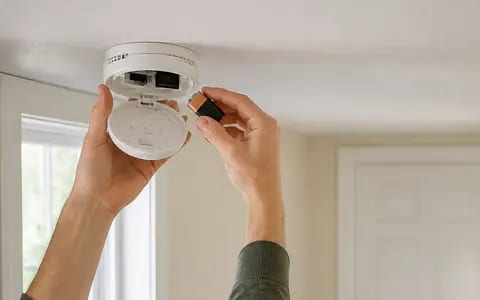
Press and hold the test button until the smoke alarm sounds. It only takes a few seconds to ensure the new battery has been fitted correctly and the smoke alarm is working. Note: If required, see firealarmsystems.co.uk for wiring and compatibility information for mains connected smoke alarm systems.
Dispose of Old Batteries Properly
Remember old smoke alarm batteries are dangerous to throw in your regular rubbish as they can cause a fire in the waste processing centre. Most supermarkets and household waste sites now have battery recycling points for old batteries like 9V block batteries and AA batteries. Many of these recycling points are now located in obvious places such as at the front of the supermarket near the entrance with a special recycling bin provided for old batteries.
Keep a Written Log for Multiple Properties
The above strategy is fairly easy to implement when you are responsible for a single property but becomes much more complex if you are responsible for a number of properties (such as a landlord of rented properties, a manager of a place of work, or the owner of a number of holiday homes).
Regular check-ups of the remaining batteries and tests of all smoke alarms for your home or rental property will mean that every one is working properly to detect fire when needed.












Post Comment