How to Build a Complete Fishing Tackle Kit from Scratch
Starting out in fishing can feel overwhelming. Walk into any tackle shop, and you will find hundreds of products staring back at you. Hooks, lines, weights, lures, and boxes of gear you cannot even name yet. However, building a solid fishing kit does not have to be complicated or expensive. With a clear plan and a little guidance, any beginner can put together a complete setup that works across a wide range of fishing situations. This guide walks you through everything you need, from the very first hook to the finishing touches that separate a good kit from a great one.
Why Starting from Scratch Is Actually an Advantage
Many new anglers make the mistake of buying a pre-packaged kit from a big-box store. These kits often include low-quality gear that breaks quickly. Additionally, they rarely match the type of fishing you actually want to do.
When you build your own kit, you choose every piece intentionally. You understand what each item does and why it is in your bag. This knowledge makes you a better angler faster. You also avoid wasting money on gear that will sit unused at the bottom of a tackle box.
Therefore, starting from scratch — while it takes a little more effort — pays off in the long run.
Choosing the Right Tackle Box
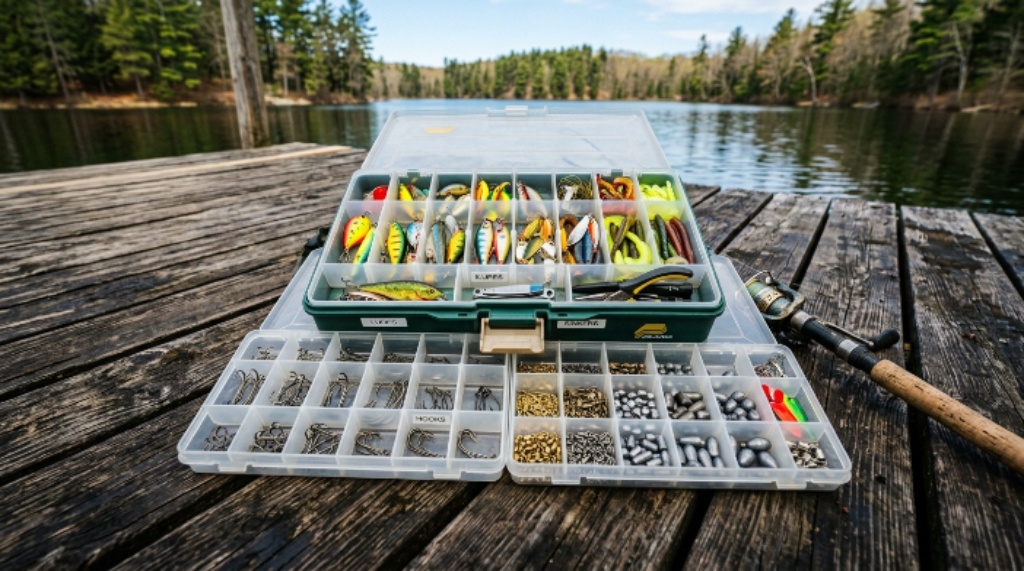
Your tackle box is the foundation of everything. It keeps your gear organized and protected. A good box does not need to be fancy. It just needs to fit your gear and be easy to carry.
For beginners, a medium-sized hard plastic box with adjustable dividers works perfectly. Look for one with at least three trays and a waterproof latch. This gives you room to grow without carrying too much weight.
As your kit expands, you can add a soft-sided bag for larger items like pliers, extra line, and snacks. Many experienced anglers use a combination of both.
The Core Tackle Essentials Every Kit Needs
No matter where you fish or what species you target, certain items belong in every kit. These tackle essentials form the backbone of your setup.
Here is what to include from day one:
- Assorted hooks in sizes 6, 4, 2, and 1/0 for versatility across species
- Split shot sinkers in small, medium, and large sizes to control depth
- Snap swivels to reduce line twist and allow quick lure changes
- Bobbers or floats in two or three sizes for different water depths
- Extra fishing line in 6 lb, 10 lb, and 14 lb test weights
- A needle-nose pliers or hook remover for safe fish handling
- A small pair of scissors or line clippers
These items cover the basics for freshwater fishing in rivers, lakes, and ponds. You can add saltwater-specific gear later if needed. However, this core list will get you fishing right away.
Understanding Lines and Leaders
Fishing line is one of the most overlooked parts of a beginner’s kit. Many new anglers simply use whatever came with their reel. This is a common mistake.
There are three main types of fishing line. Monofilament is affordable, easy to handle, and forgiving for beginners. Fluorocarbon is nearly invisible underwater and works well as a leader material. Braided line is thin, strong, and highly sensitive, but it requires more skill to handle well.
For a starter kit, monofilament in 8 to 12 lb test is the best choice. It is affordable, widely available, and works for most freshwater situations. As you gain experience, add a small spool of fluorocarbon for leader material. This simple addition can dramatically increase your catch rate in clear water.
Lure Types Explained for Beginners
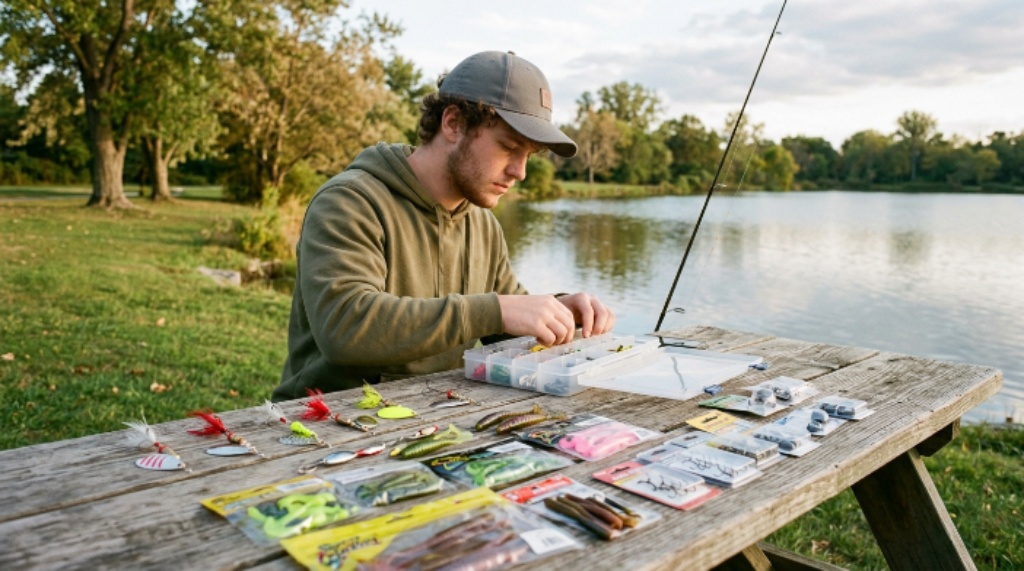
Lures are artificial baits designed to attract fish through movement, color, or vibration. Understanding lure types explained simply is one of the fastest ways to improve your fishing success.
Here is a breakdown of the most important lure categories to include in your kit:
Soft plastic lures are flexible baits that mimic worms, grubs, and crawfish. They are inexpensive, come in many colors, and work on almost every freshwater species. Start with a pack of curly tail grubs and straight worm baits in natural colors like green, brown, and black.
Spinners are metal lures with a rotating blade that creates flash and vibration in the water. They are easy to use and very effective for bass, trout, and pike. Simply cast and retrieve at a steady pace.
Crankbaits are hard plastic lures that dive and wobble when retrieved. They cover a lot of water quickly and are excellent for bass and walleye. Choose a shallow diver and a medium diver to cover different depth ranges.
Topwater lures float on the surface and create splashing or popping sounds. They produce some of the most exciting strikes in fishing. Poppers and frog lures are the most popular styles for beginners.
Jigs consist of a weighted hook with a soft or feathered body. They are incredibly versatile and work in both freshwater and saltwater. A set of jig heads paired with soft plastic trailers covers an enormous range of situations.
Aim for at least two or three styles of lures in your starter kit. This gives you options when fish are not responding to one type.
Live and Natural Bait Basics
Lures are exciting, but natural bait often outperforms them — especially for beginners. Earthworms, minnows, and crickets are reliable choices that fish recognize as food.
If you plan to use live bait, add a small bait container or aerator to your kit. Additionally, pack a few size 6 and size 4 Aberdeen hooks, which are thin-wire hooks designed specifically for live bait. They keep the bait alive longer and produce fewer gut-hook injuries, making catch-and-release easier.
Practical Fishing Hacks to Maximize Your Kit
Experience teaches you shortcuts that books rarely mention. These fishing hacks help you get more out of your gear without spending more money.
Use a rubber band around your soft plastic bags to keep them sealed and prevent the plasticizer oil from leaking onto other gear. Change the oil from sandwich bags if the originals wear out.
Carry a small bottle of scent attractant. A drop on your soft plastic lure can make a huge difference, especially in murky water where fish rely more on smell than sight.
Store your hooks by size using small zip-lock bags inside your tackle box. This saves time on the water and prevents tangled hooks from becoming a frustrating mess.
Add a strip of foam or a pool noodle piece to the bottom of your tackle box tray. Press hooks into it for easy access and to prevent point damage.
Sharpen your hooks regularly. A dull hook is the number-one reason fish escape after a strike. A small hook file costs almost nothing and makes a real difference.
Building for the Water You Fish
Not every kit looks the same. The gear you need depends on where and what you fish. A bass angler in a southern reservoir needs different lures than a trout angler in a mountain stream.
Take a moment to research your local waters before buying gear. Find out what species live there, what depth the water runs, and what natural food sources are present. Then match your lures and rigs to those conditions. This targeted approach produces far better results than buying random gear.
Additionally, talk to local bait shops. Staff in these stores know the local fishery better than any online guide. They can tell you exactly what is working right now, saving you hours of trial and error.
Organizing and Maintaining Your Kit
A well-organized kit is faster to use and easier to restock. After every fishing trip, rinse your lures and hardware with fresh water if you fished in saltwater or sandy conditions. Dry everything before closing the box to prevent rust.
Check your hooks for dullness and rust after each trip. Replace any that show significant wear. Hooks are inexpensive, and fresh, sharp hooks catch more fish.
Keep a small notepad or use your phone to record what worked each trip — the lure color, the depth, the time of day, and the weather. Over time, this log becomes a powerful personal resource that no tackle shop can sell you.
Conclusion
Building a fishing tackle kit from scratch is one of the most rewarding steps any new angler can take. You start with the core tackle essentials — hooks, sinkers, swivels, line, and basic tools — and expand from there. Learning to understand lure types explained clearly helps you make smarter choices at the shop and on the water. Simple fishing hacks keep your gear performing well for longer. Most importantly, matching your kit to the water you fish ensures that every item earns its place in your box.
Fishing is a lifelong skill. Your kit will grow and change as you do. However, every expert angler started with a few basic pieces and a willingness to learn. Take that first step, build your kit with intention, and get out on the water. The fish are waiting.
Frequently Asked Questions
How much does it cost to build a beginner fishing tackle kit from scratch?
A solid starter kit can be built for between $30 and $75. This covers hooks, sinkers, swivels, a few lures, extra line, and a basic tackle box. You do not need to spend more than this to start catching fish right away.
What is the single most important item in a fishing tackle kit?
Hooks are the most essential item. Without a hook, no other piece of gear matters. Stock a variety of sizes from the very beginning. Sharp, quality hooks in the right size for your target species will outperform expensive lures every time.
Can I use the same kit for both freshwater and saltwater fishing?
Some items overlap, such as hooks, swivels, and line. However, saltwater fishing requires corrosion-resistant gear. If you plan to fish in the ocean or tidal areas, invest in stainless steel or nickel-plated hardware and replace gear more frequently due to salt exposure.
How many lures should a beginner carry?
Aim for five to ten lures covering two or three different styles. A few soft plastics, one or two spinners, and a crankbait or jig give you enough variety to adapt to different conditions without overpacking your box.
How do I know when to replace fishing line?
Replace monofilament line at least once a season, or sooner if it feels stiff, shows visible nicks, or has taken on a coiled memory shape. Old or damaged line breaks at critical moments and costs you fish. Fresh line is one of the most affordable upgrades you can make.
Related Topics:










Post Comment