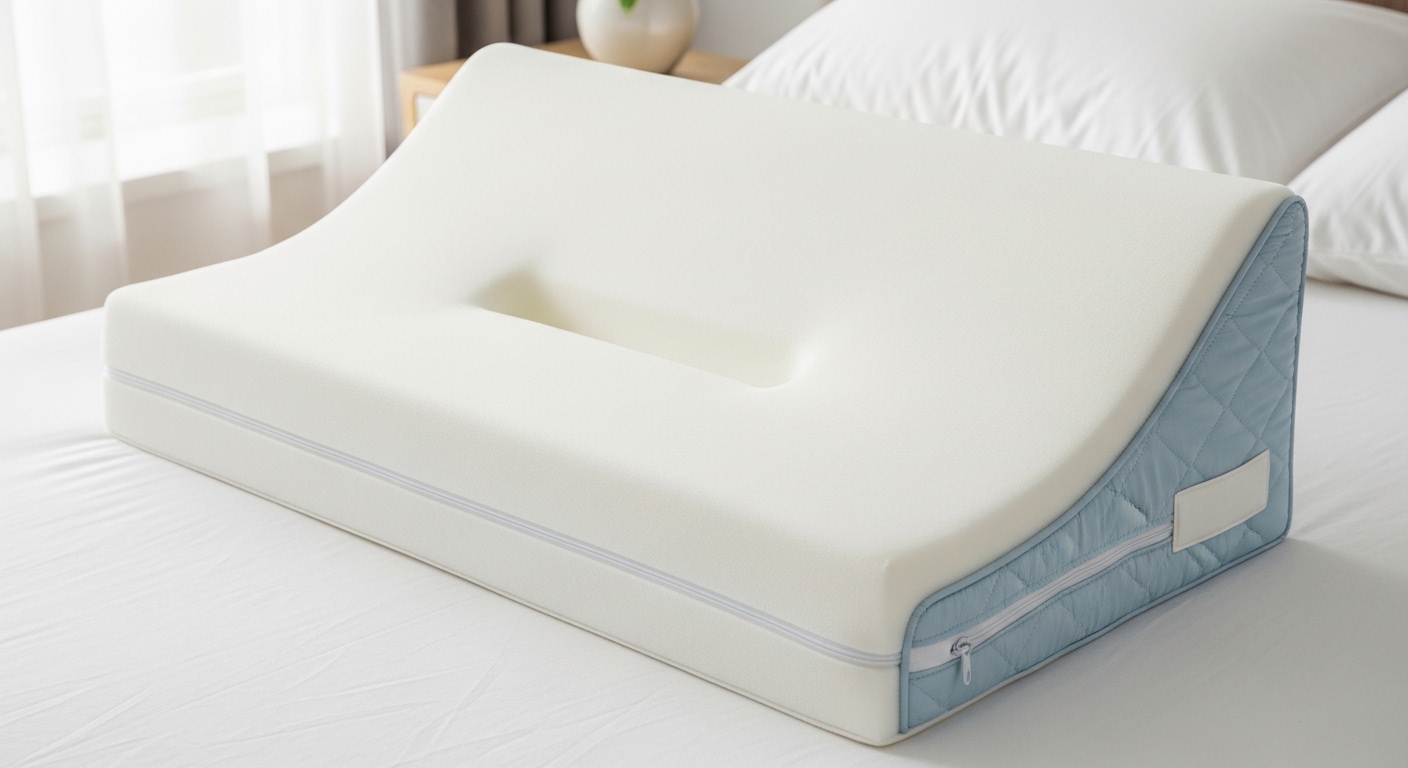
How to Pick a Memory Foam Wedge Pillow for Sleep Apnea
Sleep apnea can quietly disrupt breathing hundreds of times per night. Many people assume treatment always requires a CPAP machine. But for mild to moderate cases—especially positional sleep apnea—a memory foam wedge pillow can help reduce airway collapse by elevating the upper body at a safe angle.
A memory foam wedge pillow for sleep apnea is a triangular support pillow designed to raise the head, neck, and chest during sleep. This elevation helps keep the airway open, reduces snoring, improves oxygen flow, and supports better sleep posture. Clinical sleep-position research shows that elevating the torso by 30–45 degrees can significantly reduce airway obstruction episodes in positional apnea cases.
However, not all wedge pillows work the same way. Height, firmness, density, shape, and sleeping style compatibility all affect results. Choosing the wrong pillow can reduce comfort and limit benefits.
This guide explains exactly how to pick the right memory foam wedge pillow for sleep apnea using medical logic, sleep-position science, and real-world usage insights—so you can choose confidently and sleep better.
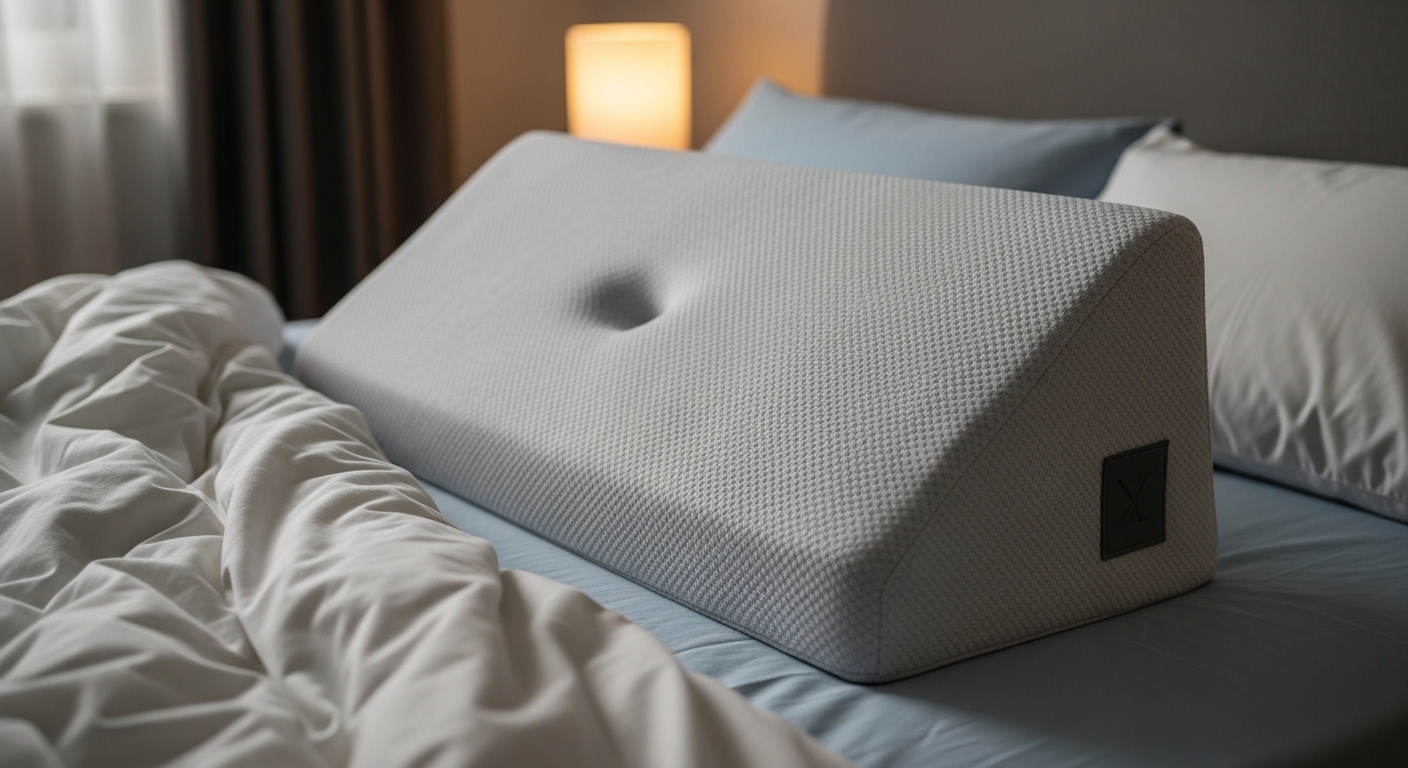
What Is a Memory Foam Wedge Pillow for Sleep Apnea?
A memory foam wedge pillow for sleep apnea is a triangular pillow that elevates the upper body to reduce airway blockage during sleep.
Sleep apnea happens when throat muscles relax and narrow the airway. This interruption reduces oxygen intake and triggers repeated awakenings throughout the night.
A wedge pillow solves part of this problem by changing body position. Instead of lying flat, the sleeper rests at an incline. This prevents the tongue and soft tissue from collapsing backward.
Memory foam improves the effect because it:
- Supports natural spinal alignment
- Reduces pressure on the neck
- Maintains shape overnight
- Prevents sliding during sleep
According to positional therapy research, sleeping with the torso elevated can reduce apnea severity in position-dependent patients by lowering airway obstruction events.
This makes wedge pillows a practical non-invasive sleep support tool.
Why Does Elevation Help Reduce Sleep Apnea Symptoms?
Elevation helps sleep apnea by preventing airway collapse and improving breathing efficiency during sleep.
When lying flat, gravity pulls throat tissue backward. This narrows airflow and increases snoring.
Elevation changes airway geometry in three important ways:
- Keeps the tongue forward
- Reduces throat compression
- Improves lung expansion
A clinical positional sleep study published in respiratory medicine literature observed fewer apnea events when participants slept at an incline compared to flat positioning.
This supports why many sleep specialists recommend wedge pillows as a complementary therapy alongside lifestyle changes.
For people with mild obstructive sleep apnea, elevation alone can noticeably reduce nighttime interruptions.
What Height Memory Foam Wedge Pillow Works Best for Sleep Apnea?
The best wedge pillow height for sleep apnea is usually between 7 and 12 inches depending on body size and sleeping position.
The correct incline angle is critical. Too low provides little airway support. Too steep creates neck strain.
| User Type | Recommended Height | Benefit |
|---|---|---|
| Back sleepers | 10–12 inches | Maximum airway opening |
| Side sleepers | 7–9 inches | Balanced spinal alignment |
| Combination sleepers | 8–10 inches | Flexible positioning support |
Clinical positional therapy guidance often suggests a torso elevation angle between 30° and 45° for breathing improvement.
If snoring and apnea worsen when lying flat, higher wedge elevation typically produces better results.
Why Is Memory Foam Better Than Regular Foam for Sleep Apnea Wedge Pillows?
Memory foam is better because it adapts to head and neck shape while maintaining airway-supporting elevation throughout the night.
Traditional foam compresses unevenly. This reduces support and can shift posture.
Memory foam responds differently. It distributes pressure gradually and returns to its original shape after use.
This provides:
- Consistent airway positioning
- Reduced shoulder tension
- Stable head support
- Improved sleep comfort
Sleep ergonomics research shows that proper cervical alignment improves breathing stability during rest.
Because memory foam adapts slowly, it prevents sudden posture collapse that can trigger apnea episodes.
What Density Memory Foam Should You Choose for Sleep Apnea Support?
Medium to high-density memory foam provides the most effective support for sleep apnea wedge pillows.
Foam density determines durability and pressure response.
- Low density: compresses too quickly
- Medium density: balanced comfort and support
- High density: strongest airway elevation stability
Most sleep specialists recommend medium-firm wedges because they maintain elevation without feeling rigid.
A pillow that collapses overnight cannot support breathing posture effectively.
How Does Sleeping Position Affect Wedge Pillow Choice?
Your sleeping position determines the wedge height, width, and slope needed for effective apnea relief.
Back sleepers benefit most from wedge elevation because airway collapse is strongest in this posture.
Side sleepers need wider wedge surfaces to maintain alignment between shoulder and spine.
Combination sleepers should look for:
- gradual incline angles
- wider base support
- medium height profiles
A poorly matched wedge can cause neck rotation, reducing its breathing benefit.
Can a Memory Foam Wedge Pillow Replace a CPAP Machine?
No, a wedge pillow cannot replace CPAP therapy for moderate to severe sleep apnea, but it can improve symptoms in mild cases.
CPAP machines maintain continuous airway pressure. Wedge pillows adjust body posture.
They serve different roles.
However, positional therapy studies suggest incline sleeping reduces apnea severity in patients whose symptoms worsen when lying flat.
Many users combine wedge pillows with:
- weight management
- side sleeping
- nasal breathing support
- sleep routine improvements
This layered approach often improves sleep quality without invasive treatment.
What Features Should You Look for in a Memory Foam Wedge Pillow?
The most important features include correct height, breathable cover, high-density foam, and stable base support.
Choosing the right wedge requires evaluating both comfort and structural performance.
- removable washable cover
- ventilated memory foam
- non-slip base
- certified foam materials
- wide shoulder support area
These features improve long-term usability and hygiene.
Breathable covers are especially important for warm climates because memory foam retains heat.
How Does a Wedge Pillow Reduce Snoring Linked to Sleep Apnea?
A wedge pillow reduces snoring by preventing airway narrowing caused by gravity during flat sleeping.
Snoring occurs when airflow vibrates relaxed throat tissue.
Elevation reduces this vibration by stabilizing airway structure.
Clinical sleep-position research indicates snoring intensity drops when upper body elevation exceeds 30 degrees.
Many users notice improvement within the first week of switching to incline sleeping.
Is There Clinical Evidence Supporting Wedge Pillows for Sleep Apnea?
Yes, positional therapy studies show elevated sleep posture can reduce apnea episodes in position-dependent cases.
Researchers studying positional obstructive sleep apnea observed fewer breathing interruptions when participants avoided flat sleeping positions.
Upper-body elevation improves:
- oxygen flow
- airway openness
- sleep continuity
- snoring intensity
While wedge pillows are not standalone medical treatment, they are widely recommended as supportive therapy.
How Long Does It Take to Adjust to a Memory Foam Wedge Pillow?
Most people adapt to a wedge pillow within 5 to 10 nights.
Initial adjustment may include:
- shoulder pressure awareness
- minor neck stiffness
- position changes during sleep
These effects usually disappear once the body adapts to incline posture.
Using a thin head pillow on top of the wedge often improves comfort during transition.
What Size Wedge Pillow Works Best for Adults With Sleep Apnea?
A full-length wedge pillow between 24 and 32 inches wide provides optimal adult support.
Smaller wedges shift during sleep and reduce effectiveness.
Wider pillows allow:
- stable shoulder placement
- consistent head alignment
- reduced sliding
People with broader shoulders should choose wider wedge bases for better spinal positioning.
Are Cooling Memory Foam Wedge Pillows Better for Sleep Apnea?
Cooling memory foam wedge pillows improve comfort but do not directly change apnea severity.
Temperature regulation matters because overheating disrupts sleep cycles.
Cooling features include:
- gel-infused foam
- ventilation channels
- breathable covers
Better sleep comfort indirectly supports breathing stability.
How Do You Know If a Wedge Pillow Is Working for Sleep Apnea?
Signs of improvement include reduced snoring, fewer awakenings, and better morning alertness.
Additional indicators include:
- less dry mouth
- lower nighttime restlessness
- improved breathing comfort
If symptoms persist after several weeks, medical sleep evaluation is recommended.
Conclusion: How Do You Choose the Right Memory Foam Wedge Pillow for Sleep Apnea?
The right memory foam wedge pillow for sleep apnea supports breathing by maintaining airway-friendly elevation throughout the night. Choosing the correct height, density, and width makes the difference between mild improvement and measurable relief.
If your sleep apnea symptoms worsen when lying flat, switching to incline-supported sleeping can reduce snoring, improve oxygen flow, and help restore deeper rest cycles.
Start with a medium-firm wedge between 7 and 12 inches high. Match it to your sleeping position. Look for breathable materials and stable base support.
Better sleep posture is one of the simplest steps you can take to improve nighttime breathing.
Choose a quality wedge pillow today and begin improving your sleep naturally—one elevated night at a time.
FAQs About Memory Foam Wedge Pillow Sleep Apnea
Can a memory foam wedge pillow cure sleep apnea?
No. A wedge pillow cannot cure sleep apnea. It can reduce symptoms in mild positional cases by improving airway alignment during sleep.
What wedge pillow angle helps sleep apnea most?
An elevation angle between 30 and 45 degrees is commonly recommended for reducing airway obstruction during sleep.
Is a 12-inch wedge pillow too high for sleep apnea?
No. A 12-inch wedge is suitable for many back sleepers who need stronger airway elevation support.
Can side sleepers use wedge pillows for sleep apnea?
Yes. Side sleepers benefit from wedges between 7 and 9 inches high that maintain shoulder and spine alignment.
Do wedge pillows reduce snoring immediately?
Some users notice improvement within the first few nights, but consistent results typically appear after one to two weeks.
Are memory foam wedge pillows safe for nightly use?
Yes. High-quality memory foam wedges are safe for nightly use and support long-term posture improvement.
Should you combine a wedge pillow with CPAP therapy?
Yes. Many users combine both for added comfort and improved breathing support during treatment.
Read More Also: How to Find Lightweight Golf Rain Pants That Are Easy to Carry










Post Comment